

You do not need to
know what to say.
Most people are not used to speaking about their lives on camera. They wonder what they should prepare, whether they will remember enough, or if they will be comfortable once filming begins.
That is not something they need to solve beforehand.
The experience is designed to feel like a thoughtful conversation, with enough time and space for the person to settle in and be themselves.
What filming day actually feels like
There are cameras in the room, but they are not the centre of it.
The focus is the conversation.
Jeff guides the person through their memories without relying on a rigid list of questions. He listens carefully, follows what feels meaningful and gives each story room to unfold.
There is no script to memorize and no expectation to perform.
Before filming
The work begins with conversations about the person, the family and the life they have lived.
We gather the background needed to understand important relationships, experiences, places and turning points. This preparation helps us recognize the stories worth spending time with when they appear.
The person being filmed does not need to prepare a speech or organize their life into chapters.
That is our responsibility.
On The Day
Filming is calm and unhurried.
We begin simply and allow the conversation to find its natural rhythm. Breaks can happen whenever they are needed. Stories can take unexpected directions. Memories that seemed small at first may lead somewhere important.
Nothing has to be delivered perfectly.
A forgotten detail can be revisited. A question can be approached differently. A quiet moment does not need to be filled.
The goal is not to capture flawless answers. It is to create the conditions for an honest conversation.
After Filming
Everything captured during filming is reviewed carefully to find the connections running through the person’s life.
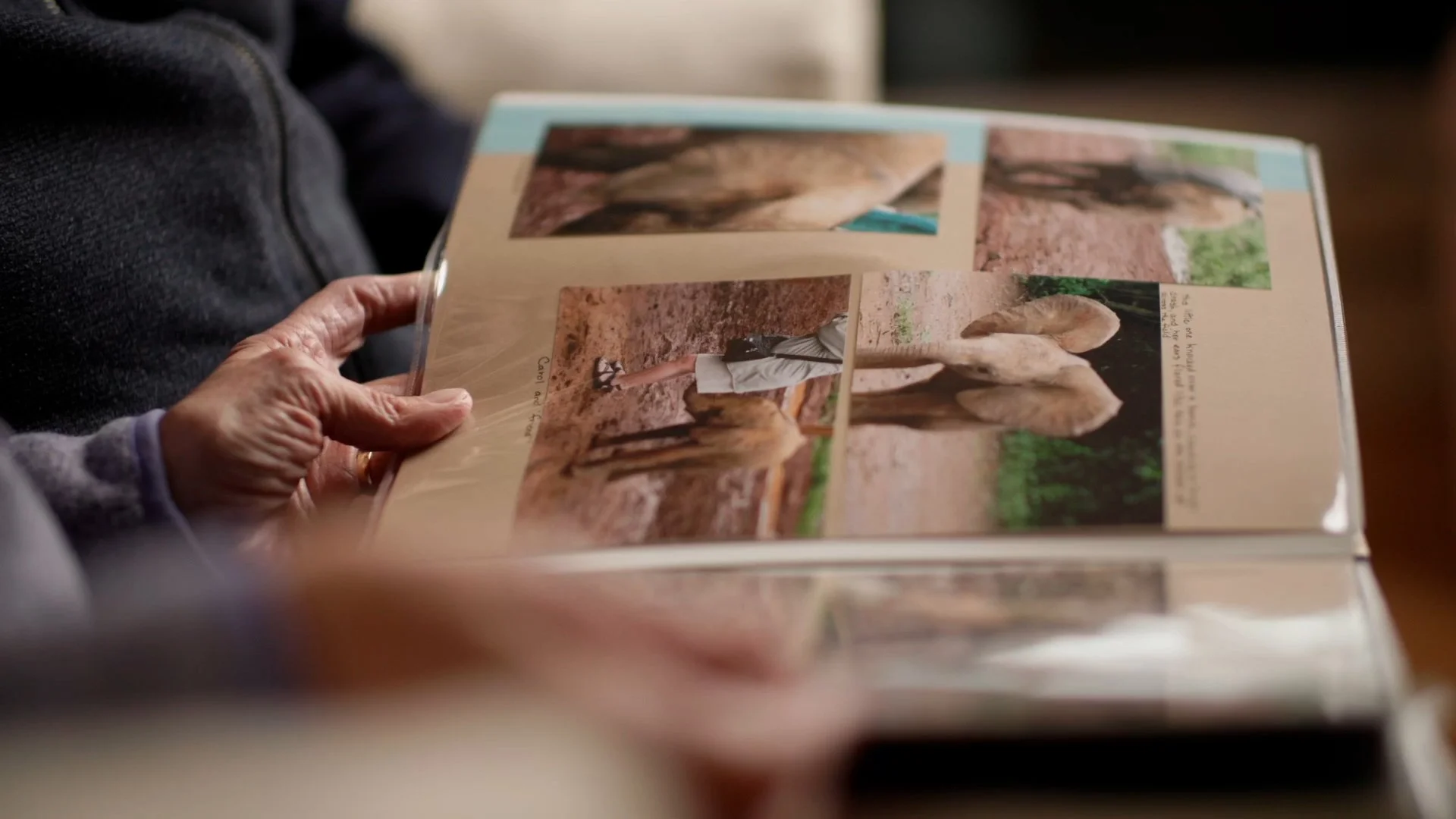
Family photographs, home movies and footage of meaningful places are brought into the story where they add context. The conversation is then shaped into a complete documentary that feels natural, coherent and true to the person.
The family does not receive a collection of interview clips.
They receive a film.
Common Questions
-
A Legacy Story can be created with a parent, grandparent, partner or another person whose life and perspective matter to the family.
Some families begin because they want to preserve the stories of an older generation. Others choose to document their own story for their children and grandchildren.
There does not need to be a special occasion or milestone.
-
No.
We gather background from the family before filming so the person does not need to organize their life into chapters, prepare a speech or remember everything on their own.
They only need to arrive willing to have a conversation.
-
Most people are.
The filming environment is designed to feel calm and conversational. There is no script, no audience and no expectation to perform. We take our time, allow for breaks and let the person settle into the experience naturally.
People often finish by saying it was easier than they expected.
-
Every conversation is shaped around the person.
We may talk about childhood, family, relationships, work, difficult seasons, important decisions, proud moments and what they have come to understand over time.
The questions are prepared thoughtfully, but the conversation is not rigid. We follow the stories that matter as they appear.
-
Yes.
Family photographs, home movies, letters, meaningful objects and footage of important places can help add context to the story.
We work with the family to identify the material that belongs in the film and use it where it adds meaning.
-
The length depends on the person and the story.
A Legacy Story is shaped into a complete documentary rather than edited to meet a fixed runtime. The film is given the space it needs without becoming repetitive or losing focus.
-
Yes.
A Legacy Story is created privately for the family. Nothing is shared publicly without the family’s clear permission.
The finished documentary belongs to the family and can be preserved and shared with the people they choose.
-
The schedule includes family preparation, filming, gathering photographs and other materials, editing, review and final delivery.
Generally it takes 10-12 weeks from the initial meeting to the finished documentary.

The cameras record the conversation. Trust makes it possible.
If you are considering a Legacy Story for someone in your family, we can begin by talking through the person, the timing and any questions you may have.